What Is a Tsunami?
A tsunami is a giant wave caused by sudden movements on the ocean floor. It results from earthquakes, landslides, or volcanic activity. These waves travel fast and can rise as high as 100 feet when they hit the shore.
Tsunamis aren’t like regular waves. They don’t curl and crash; instead, they surge inland, destroying everything in their path.
Main Causes of Tsunamis
1. Undersea Earthquakes
Most tsunamis happen after undersea earthquakes. When tectonic plates shift violently, they displace large volumes of water. This movement sends massive waves across the ocean at speeds of up to 500 mph.
2. Volcanic Eruptions
When an underwater volcano erupts, the sudden explosion can create a tsunami. The 1883 Krakatoa eruption triggered waves that killed tens of thousands of people in Indonesia.
3. Landslides
Submarine landslides caused by earthquakes or erosion can displace water suddenly. That movement pushes out waves that grow larger as they near land.
Deadliest Tsunamis in History
The 2004 Indian Ocean Tsunami
A 9.1 magnitude earthquake struck off the coast of Sumatra. It caused waves that reached 14 countries. Over 230,000 people died, and millions were displaced.
Japan’s 2011 Tōhoku Tsunami
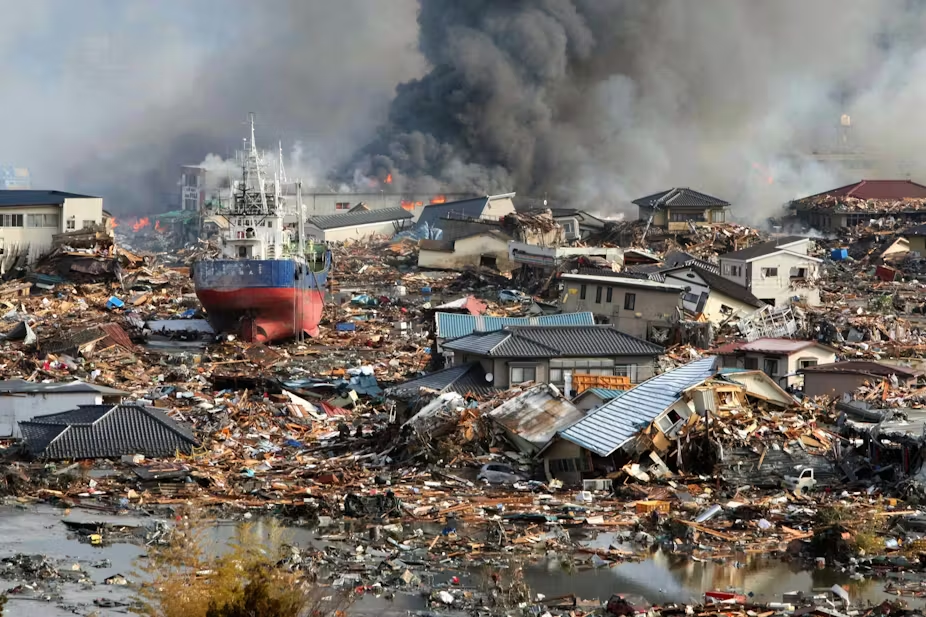
Triggered by a 9.0 magnitude quake, this tsunami struck Japan’s coast. It caused massive destruction and led to the Fukushima nuclear disaster.
How Tsunamis Impact Coastal Communities
Tsunamis destroy homes, roads, and infrastructure. Entire villages can vanish within minutes. Beyond physical damage, survivors often face trauma, disease outbreaks, and food shortages.
Flooded areas become breeding grounds for illness. Rebuilding takes years, sometimes decades.
Tsunami Preparedness: How to Stay Safe
Have an Emergency Plan
Always know your local tsunami evacuation route. Practice it with your family at least twice a year.
Pack a Go-Bag
Keep a bag ready with water, food, flashlight, radio, and first aid. This bag should be easy to carry and waterproof.
Heed Warnings and Signs
If the sea suddenly recedes or you feel an earthquake near the coast, move to higher ground immediately. Don’t wait for sirens or officials.
Tsunamis vs. Tidal Waves: What’s the Difference?
People often confuse tsunamis with tidal waves. Tidal waves are caused by gravitational forces from the moon or sun. Tsunamis are the result of seismic activity.
The two are unrelated in both cause and behavior.
Early Warning Systems Save Lives
Many countries now use buoys and seismic sensors. These tools detect changes under the ocean and send alerts. Even a few minutes’ notice can mean the difference between life and death.
Frequently Asked Questions
Q: Can tsunamis be predicted?
A: No, but early detection systems can alert coastal areas right after an undersea disturbance.
Q: How fast do tsunamis travel?
A: They can reach speeds up to 500–800 km/h in deep water.
Q: What areas are most at risk?
A: Countries along the Pacific Ring of Fire, such as Japan, Indonesia, and Chile.
Q: Is it safe after the first wave?
A: No. Tsunamis often come in multiple waves, hours apart.
Q: Can animals sense tsunamis?
A: Yes. Many animals flee to higher ground before a tsunami strikes.
Conclusion
Tsunamis are deadly, but preparedness saves lives. Understanding the causes and signs can keep you and your loved ones safe. Always stay alert in coastal areas and respect the power of the ocean.