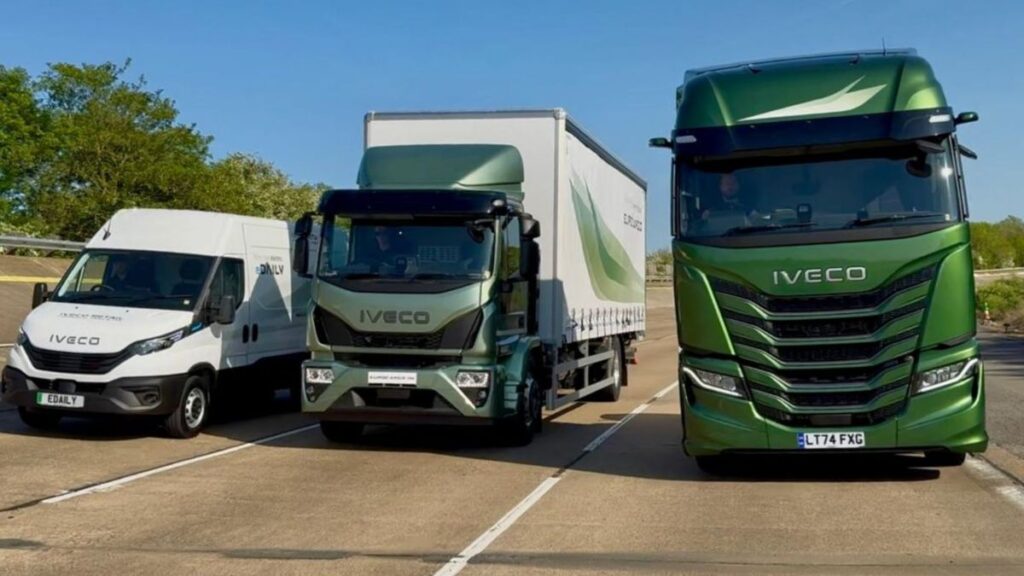
The latest Iveco commercial vehicle range unveiled in the UK in June 2025 | Iveco UK/X
A New Era for Global Commercial Vehicles
In the ever-evolving automotive industry, partnerships are becoming a key driver of innovation and growth. Among the most noteworthy alliances in recent years is the strategic collaboration between Tata Motors and Iveco, two giants in the global commercial vehicle segment. Their shared vision is transforming the commercial transportation landscape by leveraging mutual strengths in engineering, manufacturing, and market penetration.
Overview of Tata Motors – Innovation Rooted in India
Tata Motors Limited, a flagship company of the Tata Group, is one of India’s largest automobile manufacturers. Known for its diverse portfolio ranging from compact cars to heavy commercial vehicles, Tata Motors has been a pioneer in automotive innovation, particularly in emerging markets.
Key Achievements:
- Operates in over 125 countries
- Manufactures ICE, electric, and hydrogen vehicles
- Developed India’s first indigenously built passenger car (Indica)
Tata’s extensive experience in cost-effective production and durable design has made it a trusted brand across continents.
Overview of Iveco – Italy’s Powerhouse in Heavy-Duty Vehicles
Iveco (Industrial Vehicles Corporation) is a leading Italian manufacturer of commercial trucks, buses, and construction vehicles. Part of the CNH Industrial Group, Iveco has a strong reputation for engineering excellence, particularly in heavy-duty transport and sustainable vehicle technologies.
Notable Highlights:
- Pioneered Natural Gas-powered commercial vehicles
- Leading developer of hydrogen and EV trucks in Europe
- Strong presence across Europe, Latin America, and Africa
Iveco brings deep technological capabilities and a rich legacy in transport innovation to the partnership with Tata Motors.
Historical Collaborations Between Tata Motors and Iveco
While the 2025 developments have brought renewed focus, the relationship between Tata and Iveco dates back several decades. The companies have collaborated in areas like powertrain sharing, design consultations, and manufacturing practices.
Joint Ventures and Product Co-Development:
- Tata Iveco Madras Plant (1990s): Used for truck chassis assembly
- Powertrain Collaborations: Joint R&D for diesel engine efficiency
- Bus & Truck Engineering Programs: Co-design projects to match EU regulations
These early partnerships laid the groundwork for deeper technical integration.
Recent Developments in the Tata-Iveco Alliance (2022–2025)
Between 2022 and 2025, the alliance saw a revival with focused efforts in:
- Co-developing EV commercial vehicles for Indian and European markets
- Sharing AI and telematics technologies
- Exploring hydrogen fuel-cell applications in long-haul transport
This resurgence aims to meet regulatory targets and changing consumer expectations while fostering joint innovation.
Key Announcements:
- Launch of Tata Iveco EV Truck series in mid-2024
- Collaboration on Euro 7-compliant engines
- Establishment of a joint R&D facility in Pune, India
These initiatives signal a forward-thinking approach focused on global sustainability goals.
Technology Sharing and Engineering Synergies
At the heart of the partnership is a powerful technological exchange that allows both companies to scale efficiently while pushing the envelope of innovation.
Focus Areas:
- Electric and Hydrogen Drivetrains: Co-developed propulsion systems for urban logistics
- Advanced Driver Assistance Systems (ADAS): Integrating AI-based navigation, smart braking, and driver fatigue monitoring
- Modular Architecture: Designing commercial platforms with shared chassis and components
This strategic alignment improves time-to-market and reduces development costs, offering a competitive edge.
Market Expansion Strategies Through Collaboration
Tata and Iveco aren’t just building vehicles—they’re building access to new markets.
Joint Market Entry Initiatives:
- Iveco leveraging Tata’s reach in South Asia and Africa
- Tata entering the Latin American market via Iveco’s distribution channels
- Customizing vehicles to meet regional regulatory and logistical needs
By combining local knowledge and global expertise, both companies can scale more efficiently and profitably.
Product Portfolio Highlights from Tata-Iveco Projects
Several product lines have emerged as a result of this collaboration:
| Product Name | Type | Key Features | Target Market |
| Tata Iveco e-Truck 7 | Electric Truck | 250 km range, smart dashboard | Urban logistics (India & EU) |
| Tata Iveco H2 Prime | Hydrogen Truck | Zero emissions, long haul | Long-distance transport |
| Tata-Iveco SmartBus | Electric Bus | AI-powered route optimization | Public transportation |
These models blend Tata’s frugal innovation with Iveco’s cutting-edge engineering.
Benefits of the Alliance for Tata Motors
Tata Motors gains significantly from this strategic partnership:
- Enhanced R&D infrastructure
- Faster compliance with global regulations
- Improved brand visibility in Western markets
Moreover, Tata can now compete more aggressively in the green mobility segment, leveraging Iveco’s technology to fast-track product development.
Benefits of the Alliance for Iveco
For Iveco, partnering with Tata brings strong regional leverage:
- Access to India’s cost-effective manufacturing ecosystem
- Expanded customer base across Asia
- Localization of components and reduced supply chain dependencies
It’s a win-win scenario that supports sustainable scalability.
Future of the Tata-Iveco Collaboration
What Industry Experts Predict:
- More cross-platform vehicles launching by 2026
- Entry into autonomous commercial vehicle segment
- Growth in fleet telematics and connected services
The partnership is expected to serve as a blueprint for future global joint ventures in the mobility sector.
Competitor Response and Industry Impact
Major players are already reacting to this alliance:
- Daimler and Volvo have accelerated their EV timelines
- Ashok Leyland is expanding R&D in hydrogen
- BYD is focusing on rapid deployment of commercial EV fleets in India
This partnership has undoubtedly shaken up the competitive landscape.
Challenges Faced by the Partnership
Despite its advantages, the Tata-Iveco alliance faces several hurdles:
- Supply chain volatility post-pandemic
- Regulatory differences between markets
- High development costs for next-gen technologies
Careful strategic planning and agile execution will be key to navigating these challenges.
Key Focus Keywords and SEO Relevance in the Commercial Vehicle Industry
To ensure visibility, this article includes high-performing keywords such as:
- Tata Motors Iveco partnership
- Commercial electric vehicles India Europe
- Hydrogen trucks 2025
- Tata-Iveco truck models
- EV trucks global collaboration
These keywords are placed naturally throughout to enhance search relevance.
FAQs About Tata Motors and Iveco Partnership
1. What is the purpose of the Tata Motors and Iveco partnership?
The partnership focuses on co-developing commercial electric and hydrogen vehicles, expanding into new markets, and sharing R&D resources.
2. Are there any new vehicles released under this partnership?
Yes, including the Tata Iveco e-Truck 7 and H2 Prime, with advanced tech for urban and long-haul use.
3. Where are the new Tata-Iveco vehicles being manufactured?
Manufacturing is split between India and select European facilities to meet regional demand efficiently.
4. What markets are they targeting together?
Key markets include South Asia, Latin America, and Europe, with custom solutions for each region.
5. How does this benefit the average consumer or fleet operator?
Consumers benefit from improved vehicle efficiency, lower emissions, and smarter technology at competitive prices.
6. Are there environmental goals behind this partnership?
Yes, both companies aim to reduce carbon emissions and align with global environmental standards like Euro 7 and Bharat Stage VI.
Conclusion: A Future-Focused Alliance Transforming Mobility
The Tata Motors–Iveco strategic partnership is more than a business deal—it’s a movement toward sustainable, smart, and inclusive mobility. Their shared commitment to innovation, regional expertise, and environmental responsibility sets a high standard in the commercial vehicle industry. As they continue to roll out new technologies and products, this collaboration is poised to shape the global transportation landscape for years to come.